
Educational Resources
Mason Veloria provides educational resources designed to support informed and thoughtful cat ownership. Our materials cover practical aspects of care, development and wellbeing, with the aim of offering clear, reliable guidance that owners can apply with confidence.
Whether you are preparing for a new kitten or looking to deepen your understanding of feline needs, these resources are intended to be useful, accessible and grounded in good practice.
What You Will Find
Our educational content includes:
• Kitten care guides covering the early weeks and months in a new home
• Practical advice on nutrition, environment and daily care
• Guidance on behavior and socialization
• Articles exploring common topics in cat wellbeing
• Webinars and recorded sessions on selected subjects
Materials are written with clarity and care, avoiding unnecessary complexity while remaining informative.
Our Approach
We believe that good information helps owners make better decisions for their cats. The resources we share reflect a focus on welfare, realistic expectations and long-term wellbeing, rather than trends or quick fixes.
Content is reviewed and updated as needed so that it remains relevant and useful.
1. Kitten Care Guide – The Early Weeks and Months in a New Home
Bringing a kitten into a new home is an important transition. The first weeks set the foundation for confidence, health and a positive relationship with the household.
Preparing the home
Before the kitten arrives, create a quiet, secure space with a comfortable bed, litter tray, food and water bowls, and a few safe hiding places. Keep this area calm and consistent for the first few days so the kitten can adjust at its own pace.
The first days
Allow the kitten time to explore gradually. Avoid overwhelming it with too much handling or new experiences at once. Speak softly, move calmly, and let the kitten approach people and objects when ready.
Routine and rest
Young kittens need frequent sleep and regular meals. Establish a simple daily routine for feeding, play and quiet time. Consistency helps the kitten feel secure.
Social contact
Gentle, positive interaction is valuable, but it should never be forced. Short, calm sessions of handling and play are more effective than long or intense ones. Children should be supervised and shown how to interact respectfully.
Monitoring
Watch for normal appetite, litter tray use and energy levels. Any sudden changes in behaviour, eating or toileting should be noted and discussed with a veterinarian if they persist.
A measured, patient approach in the early weeks supports a confident and well-adjusted cat in the longer term.
2. Practical Advice on Nutrition, Environment and Daily Care
Good daily care rests on three foundations: appropriate nutrition, a suitable environment, and consistent routines.
Nutrition
Choose a complete, high-quality diet suitable for the cat’s age and lifestyle. Follow feeding guidelines as a starting point and adjust according to body condition. Fresh water should always be available. Avoid sudden changes in food; transition gradually over several days when needed.
Environment
Cats benefit from vertical space, safe resting places and opportunities to scratch. Provide at least one litter tray per cat, plus one extra, placed in quiet, accessible locations. Keep trays clean. A stable, predictable environment reduces stress.
Daily care
• Offer regular opportunities for gentle play and mental stimulation.
• Groom as needed according to coat type, introducing it calmly from a young age.
• Maintain a consistent routine for meals and quiet periods.
• Ensure the home is safe: secure windows, remove hazards, and store harmful substances out of reach.
Small, consistent habits make a significant difference to a cat’s comfort and wellbeing over time.
3. Guidance on Behavior and Socialization
A cat’s behavior is shaped by early experiences, environment and individual temperament. Understanding normal feline behavior helps owners respond appropriately and support healthy development.
Socialisation
Positive early exposure to people, everyday household sounds and gentle handling helps kittens become confident adults. Experiences should be calm and voluntary. Forcing interaction can create fear rather than trust.
Common behaviors
Scratching, climbing, hunting-style play and occasional night-time activity are natural. Providing appropriate outlets (scratching posts, climbing opportunities, interactive toys) reduces unwanted behavior.
Building confidence
Predictable routines, safe resting places and respect for the cat’s need for control over interactions all support emotional security. Punishment is counterproductive; calm redirection and reward for desired behavior are more effective.
When to seek further advice
Sudden changes in behavior, ongoing fear, aggression or litter tray problems may benefit from professional guidance. Early attention usually leads to better outcomes.
Thoughtful support of behavior and socialization helps create a stable, trusting relationship between cat and owner.
4. Articles Exploring Common Topics in Cat Wellbeing
Here are short, ready-to-use article outlines on common topics:
Creating a Calm Home Environment
Cats thrive in predictable, low-stress surroundings. Key elements include quiet resting areas, consistent daily rhythms, and the ability to retreat when needed. Reducing sudden loud noises and providing elevated vantage points can make a noticeable difference to a cat’s sense of security.
Understanding Body Language
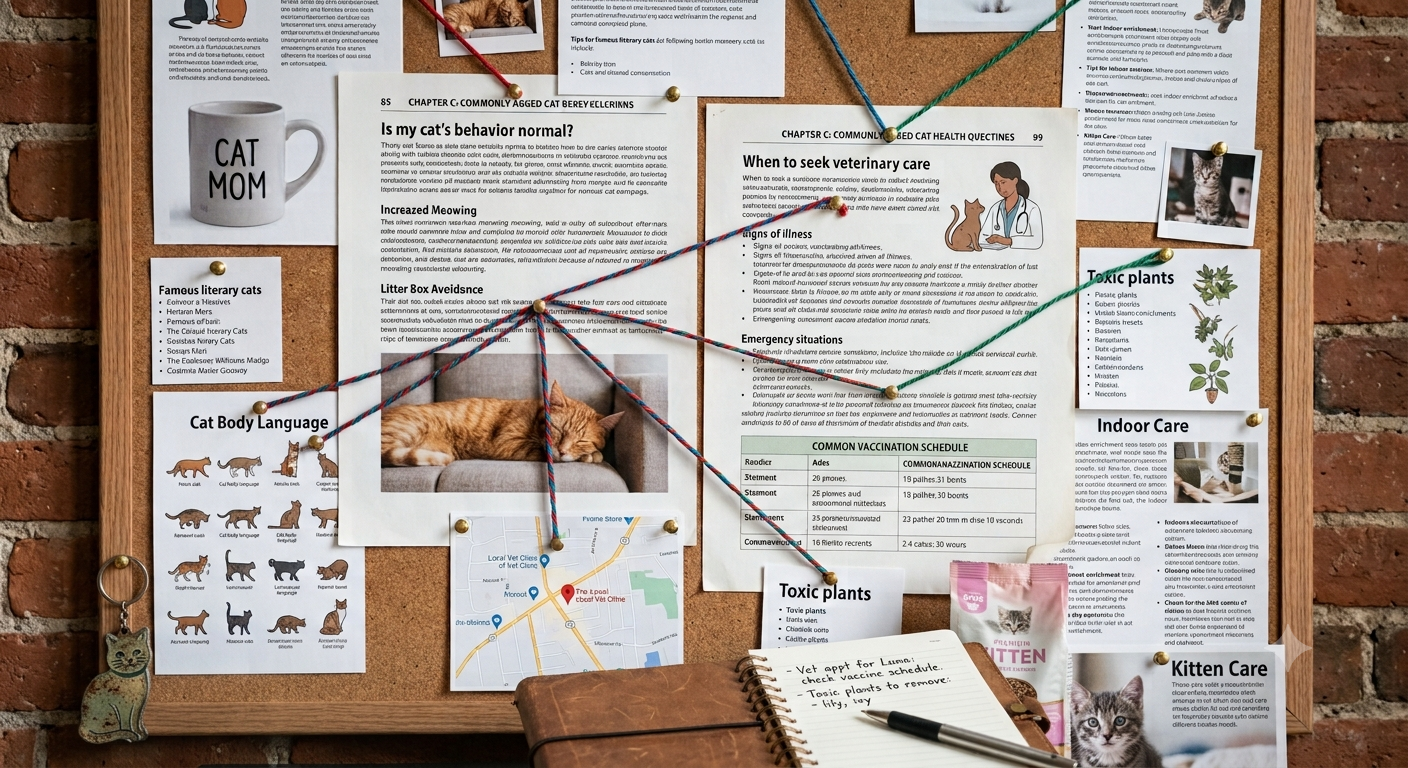
A cat’s ears, tail, posture and eyes communicate a great deal. Slow blinks often indicate relaxation, while a puffed tail or flattened ears signal discomfort. Learning to read these signals helps owners respond appropriately and avoid unnecessary stress.
The Importance of Play
Regular play satisfies natural hunting instincts and provides physical and mental exercise. Short, interactive sessions with wand toys or similar are usually more effective than long unstructured play. Ending sessions on a positive note helps maintain interest.
Supporting Older Cats
As cats age, they may need easier access to favorite resting places, more frequent smaller meals, and extra attention to joint comfort and litter tray accessibility. Regular veterinary checks become increasingly valuable.
When Routine Matters
Cats are creatures of habit. Keeping feeding times, quiet periods and household patterns relatively stable supports emotional balance, particularly during changes such as moving house or introducing new people.